












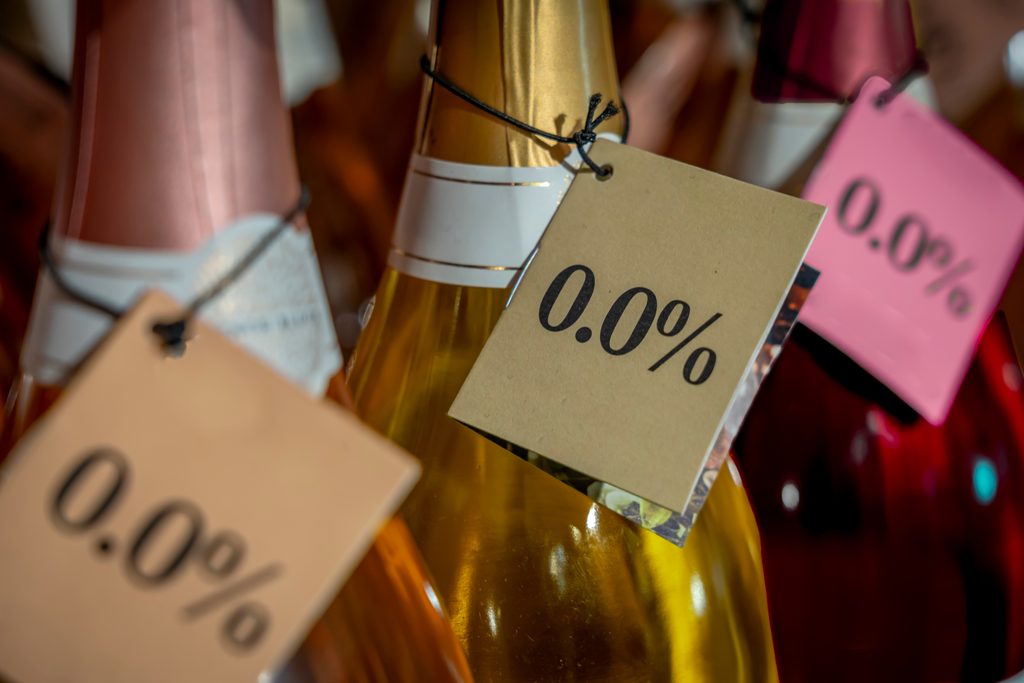
The “NoLo” (no- and low-alcohol) beverage market is growing rapidly in Europe. This category encompasses a wide range of products: alcohol-free or 0.0% beers, dealcoholized or partially dealcoholized wines, and alcohol-free alternatives to spirits.
For companies that produce, import, or market these products, however, the issue goes beyond marketing. The tax and regulatory status of a NoLo beverage can vary depending on its alcohol content, category, composition, and the country where it is sold.
It is precisely this dual nature that makes the market complex: these products are often created from an alcoholic beverag through fermentation, distillation, and subsequent dealcoholization, or by halting fermentation, yet are ultimately marketed alongside non-alcoholic drinks.
What is a NoLo drink?
The “NoLo” concept encompasses beverages whose positioning evokes or replicates that of an alcoholic drink, but whose alcohol content is lower than that normally required for the reference category, or even zero.
Three main families can be distinguished:
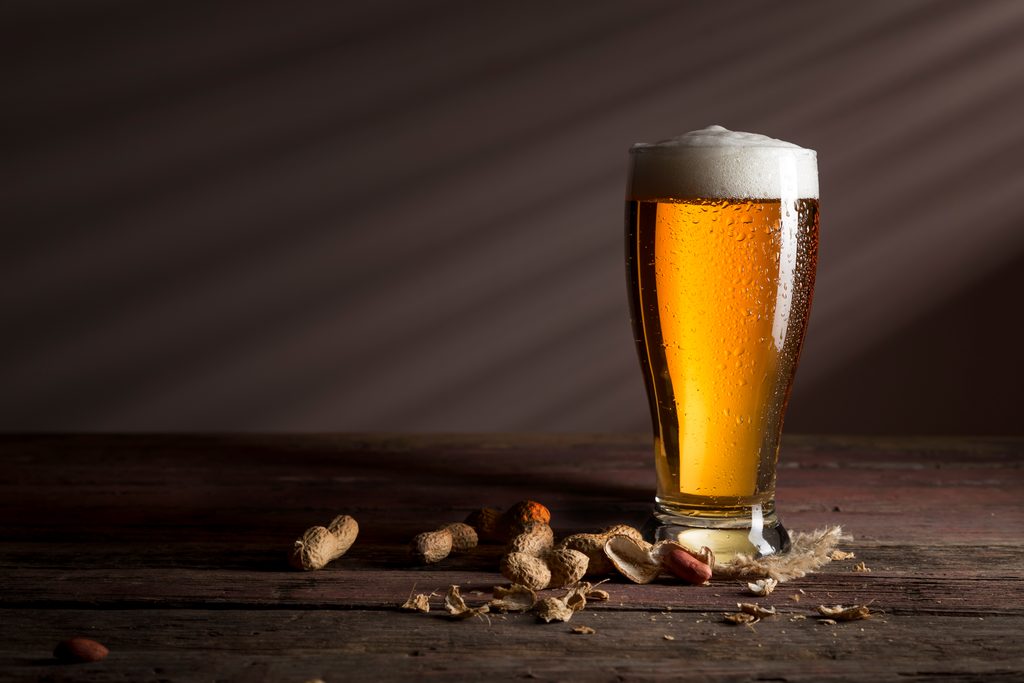
1. Alcohol-free beer and 0.0 beer
This is the most mature category in the European NoLo market and historically the most developed.
European customs regulations classify a beverage with an alcoholic strength by volume not exceeding 0.5% vol. as a non-alcoholic beverage.
As regards excise duties, Directive 92/83/EEC defines beer as a product falling notably under CN code 2203 with an alcoholic strength exceeding 0.5% vol. Beer with an alcoholic strength of 0.5% vol. or less therefore falls outside the scope of the harmonized excise duty on beer.
2. De-alcoholized or partially de-alcoholized wine
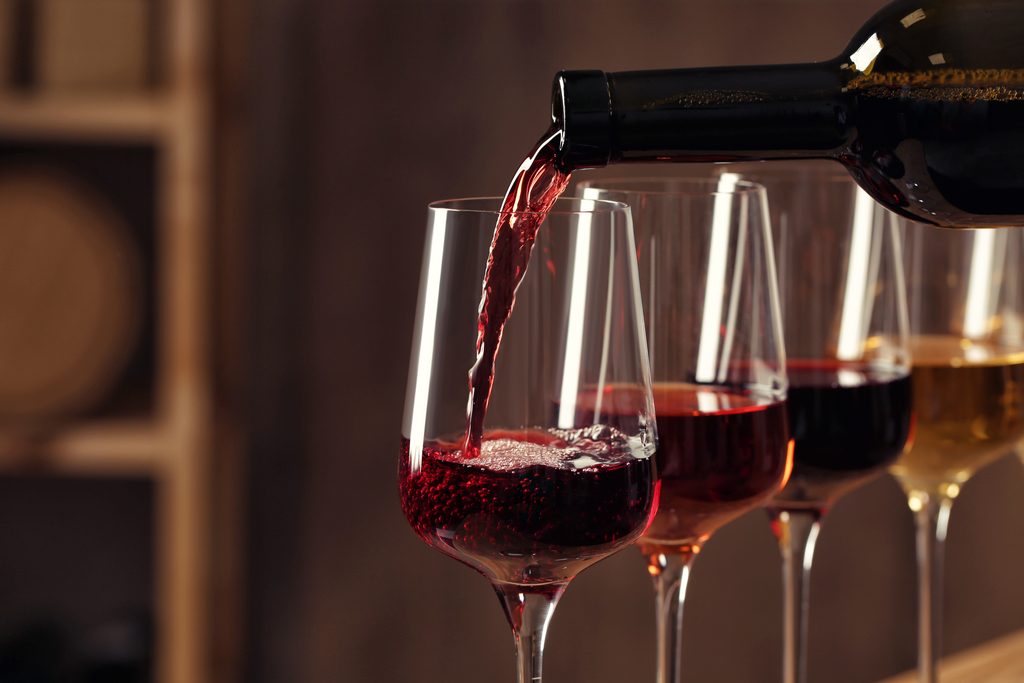
This category is particularly interesting for wine producers.
Since the reform of the Common Organisation of the Markets (CMO) introduced by Regulation (EU) 2021/2117, grapevine products may undergo total or partial dealcoholisation using authorised processes. The regulations distinguish, in particular, between a “dealcoholised” product where the alcoholic strength does not exceed 0.5% vol. and a “partially dealcoholised” product where the strength remains above 0.5% vol. but below the minimum required for the category prior to dealcoholisation.
This reform marked a major milestone in the development of the NoLo wine market in Europe.
The framework is set to evolve further: Regulation (EU) 2026/471 introduces new naming rules specifically the terms “alcohol-free,” “0.0%,” and “alcohol-light” with certain provisions applying from September 19, 2027.
3. Alcohol-free alternatives to spirits
This category is more recent and raises particularly sensitive questions regarding naming.
Regulation (EU) 2019/787 reserves the category of spirit drinks, in particular, for products with a minimum alcoholic strength of 15% vol., subject to exceptions provided for in the Regulation.
The question of the extent to which a non-alcoholic alternative may use the name of a benchmark spirit was clarified by the Court of Justice of the European Union in November 2025.
In its judgment of 13 November 2025 in Case C-563/24, *PB Vi Goods*, the CJEU held that a non-alcoholic beverage could not be marketed under the designation “gin”. The term “gin” constitutes a legal designation reserved for a specific category of spirit drink, and the addition of the indication “alcohol-free” does not make it possible to circumvent that prohibition.
For producers, the conclusion is significant: a product can be perfectly marketable without being able to use the legal designation of the alcoholic beverage it seeks to imitate.
The three parameters that determine the tax treatment
To understand the regulatory framework applicable to a NoLo beverage, three elements must be examined simultaneously.
1. Alcoholic strength by volume
Three thresholds are particularly important.
0.5% ABV: the threshold for non-alcoholic beverages and beer
For the purposes of the Combined Nomenclature, a beverage with an alcoholic strength not exceeding 0.5% vol. falls within the definition of a non-alcoholic beverage.
The same threshold plays a decisive role regarding excise duties on beer: Directive 92/83/EEC applies to beers with an alcoholic strength exceeding 0.5% vol.
1.2% ABV: the key threshold for fermented beverages
For wine, other fermented beverages, and intermediate products, the European threshold for falling within the scope of excise duties is generally set at an alcohol content exceeding 1.2% vol.
Directive 92/83/EEC thus defines wine as falling under the excise duty regime when its alcohol content exceeds 1.2% vol.
The same threshold applies to other fermented beverages and intermediate products.
The 1.2% ABV threshold is also significant regarding consumer information: Regulation (EU) No 1169/2011 stipulates that the alcoholic strength must be indicated for beverages containing more than 1.2% ABV.
15% vol.: the benchmark for spirit drinks
Regulation (EU) 2019/787 sets the minimum alcoholic strength of a spirit drink at 15% vol., subject to the exceptions provided for in the Regulation.
These three thresholds therefore make it possible to understand a large part of the tax logic behind the NoLo market.
Excise duties: a product can leave the European regime
The general excise duty regime is established by Directive (EU) 2020/262. With regard to alcohol, this Directive refers to the products covered by Directives 92/83/EEC and 92/84/EEC.
This means that a product which no longer meets the European definitions of excise-duty-eligible alcoholic products may leave the harmonized excise duty regime, even if it was produced from an alcoholic beverage.
In practice:
- beer with an alcohol content of 0.5% vol. or less does not fall within the scope of the harmonized excise duty on beer;
- wine or another fermented beverage with an alcohol content of 1.2% vol. or less generally does not fall under the corresponding excise duty categories;
- Intermediate products are also defined as having an alcoholic strength exceeding 1.2% vol.
However, a distinction must be made between this absence of harmonized excise duty and specific national taxes.
Directive 2020/262 allows Member States to impose certain indirect taxes on products other than excise goods, subject to compliance with Union law.
That is why a 0.0% beverage may be exempt from excise duty while still being subject to a national tax on sugary drinks, non-alcoholic beverages, or certain product categories.
The product’s composition then becomes a decisive factor: the presence of sugar or sweeteners, juice content, method of preparation, or other criteria defined by national legislation can alter the tax treatment.
Pay attention to the dealcoholization process.
The release of the finished product from the excise regime does not necessarily mean that the manufacturing process has no excise implications.
In the case of dealcoholized wine, for example, the base wine prior to dealcoholization remains a product subject to the regime applicable to wine. Similarly, the alcohol extracted during the process may itself fall under the regime governing alcoholic products, depending on its nature and use.
Taxation must therefore be analyzed not only when the product reaches the shelf, but also at every relevant stage of its manufacture and distribution.
VAT: the real difficulty of the NoLo market
Unlike excise duties, VAT applies to sales of NoLo drinks as well as other taxable goods and services.
The difficulty lies primarily in the applicable VAT rate.
The European VAT Directive allows Member States to apply reduced rates to certain foodstuffs and beverages, but Annex III excludes “alcoholic beverages”.
The problem is that the VAT Directive does not provide a sufficiently precise definition of the concept of “alcoholic beverage” to resolve the case of all NoLo beverages in a uniform manner.
Member States have therefore developed various approaches.
Some rely on excise duty thresholds to determine whether a beverage should be considered alcoholic.
Others use different criteria, extending even to the actual presence of ethanol, while some states apply the standard rate to a broad category of beverages regardless of their alcohol content.

The consequence is significant: the same NoLo product may be subject to different VAT rates depending on the country where it is sold.
France exemplifies a threshold-based approach. French tax policy notably provides for a reduced rate for non-alcoholic beers with an alcohol content of up to 0.5% ABV, as well as, more broadly, for beverages with an alcohol content not exceeding 1.2% ABV.
Conversely, national regulations can change rapidly. In Poland, for example, the government announced a plan in September 2026 to raise the VAT rate to 23% for certain non-alcoholic beverages, specifically non-alcoholic beers and wines meeting certain compositional criteria. Implementation is scheduled for January 1, 2027.
The alcohol content is therefore not always sufficient to determine the VAT rate. The product’s composition can also be a decisive factor.
In-store sales or on-site consumption: another factor to consider.
The VAT treatment may also depend on the distribution channel.
Implementing Regulation (EU) No 282/2011 distinguishes the mere supply of beverages from the provision of a genuine restaurant service.
A restaurant or catering service entails, in particular, the supply of food or drink accompanied by sufficient ancillary services to allow for immediate consumption, with the service element predominating over the supply of food or drink.
Thus, under national rules, the same NoLo beverage may be subject to different treatment depending on whether it is sold in a shop or served in a restaurant, bar, or hotel.
For companies operating in several European countries, this distinction must therefore be incorporated into the VAT matrix.
Tariff classification, alcohol content, and designation: the trio to secure
Before marketing a NoLo product in a new Member State, three elements must be precisely determined:
1. Tariff classification
The CN code serves as the starting point for tax and customs analysis.
By way of example, the nomenclature includes, in particular, code 2202 91 00 for non-alcoholic beer.
De-alcoholized and partially de-alcoholized wines may fall under different tariff headings depending on their alcoholic strength, composition, and manufacturing process.
The exact code must therefore be confirmed on a product-by-product basis, rather than inferred solely from the trade name.
2. Actual alcoholic strength
The alcohol content must be determined precisely, as a difference of a few tenths of a point can alter the tax classification.
Regulation (EU) No 1169/2011 provides for analytical tolerances regarding the indication of alcoholic strength for the categories concerned, notably a tolerance of 0.5% vol. for certain beers and grape-based beverages.
For a product close to a regulatory threshold, it is therefore essential not to rely solely on the rate shown on the label: the analysis method and the product’s actual characteristics must also be documented.
3. The authorized legal name
The trade name cannot necessarily be the same as that of the reference alcoholic product.
This is particularly important for spirits: the *PB Vi Goods* judgment of November 2025 confirms that a non-alcoholic product cannot be marketed as “gin” when that designation is legally reserved for a spirit drink.
For wine, conversely, European law has gradually created a framework allowing dealcoholized products to be integrated into the wine sector.
How do you declare a NoLo beverage?
Once the classification has been determined, the VAT declaration does not, in itself, require a procedure entirely distinct from that applicable to other goods.
The key issue lies rather in correctly determining the applicable rate in each Member State and, where appropriate, in classifying the transaction as a supply of goods or a restaurant service.
Regarding excise duties, the first question is to determine whether the finished product still falls within a harmonized category of alcohol or alcoholic beverages as defined by European directives.
Where a finished product is no longer subject to harmonized excise duty, the formalities specific to the excise duty regime do not apply to it solely on the grounds that it was manufactured from an alcoholic beverage.
However, earlier stages of production, alcoholic raw materials, and recovered alcohol may require separate analysis.
Why secure the classification before marketing?
The NoLo market is evolving rapidly, and national tax rules do not always follow the same logic.
For a company wishing to sell the same product in several Member States, it is therefore risky to rely solely on the sales designation “0.0”, “alcohol-free”, or “non-alcoholic”.
A compliance analysis should ideally document:
- the applicable CN/TARIC code;
- the actual alcoholic strength;
- the manufacturing process and, where applicable, the dealcoholisation process;
- the composition of the product;
- the authorized legal name;
- the applicable excise regime;
- the VAT rate applicable in each country;
- any national taxes on non-alcoholic or sugar-sweetened beverages;
- the different treatment that may apply to takeaway sales and on-site consumption.
In complex situations, companies can also secure their position using administrative tools such as Binding Tariff Information (BTI) for customs classification or, depending on the country, tax rulings or national tariff information.
Eurotax supports you with your tax compliance
Do you market NoLo beverages in Europe and wish to ensure their tax treatment is secure? Eurotax assists you in managing your VAT and excise duty obligations for both alcoholic and NoLo beverages, taking into account the specific requirements of each European market. From product analysis to determining the applicable tax regime, our experts help you ensure compliance.
Do you have a NoLo product or a specific situation to analyze? Contact Eurotax for a case study tailored to your business and markets.