


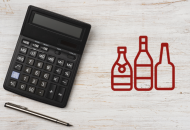










Consumers travelling across Europe quickly notice that the price of a bottle of wine, beer or spirits can vary dramatically from one country to another.
According to Eurostat’s 2025 Price Level Index, alcoholic beverages are almost three times more expensive in Iceland than the European average, while Italy offers the lowest prices among the countries compared.
However, these differences are not simply the result of production costs or retailer pricing strategies. A significant share of the gap comes from national excise duty policies, VAT rates and government public health strategies.
For companies selling alcoholic beverages across Europe, understanding these differences is essential—not only for pricing products competitively but also for ensuring compliance with complex tax regulations.
Alcohol price levels across Europe in 2025

Why are alcohol prices so different?
Several factors contribute to the wide variation in alcohol prices across Europe.
1. Excise Duties
The largest factor is excise duty, a specific indirect tax applied to alcoholic beverages.
Unlike VAT, excise duties are generally calculated according to:
- Alcohol strength (ABV)
- Product category (beer, wine, spirits, intermediate products)
- Quantity
Each country sets its own rates within the framework established by European legislation.
Nordic countries traditionally apply much higher excise duties to reduce alcohol consumption, whereas countries with strong wine-producing traditions often maintain lower taxation on certain products.
2. VAT Rates
VAT is added on top of the product price and, in many cases, also applies after excise duty has been calculated.
Countries with higher VAT rates naturally see higher final retail prices.
3. National Public Health Policies
Many governments intentionally use taxation as a policy tool.
Higher alcohol taxes are designed to:
- reduce excessive consumption;
- discourage harmful drinking;
- generate public revenue;
- finance healthcare systems.
This explains why countries such as Finland, Sweden and Ireland consistently rank among Europe’s most expensive markets.
4. Exchange Rates
For countries outside the euro area, exchange rate fluctuations can also influence the comparison.
This particularly affects:
- Iceland
- Norway
- Türkiye
- Switzerland
Italy: Europe’s most affordable alcohol market
With a price index of 81.9, Italy offers alcoholic beverages approximately 18% below the European average.
Several factors explain this position:
- comparatively moderate excise duties on wine;
- one of Europe’s largest domestic wine industries;
- strong local production reducing transport costs;
- intense market competition.
For producers and distributors, Italy remains one of the most attractive European markets.
Why this matters for businesses?
Selling alcohol internationally involves much more than choosing the right retail price.
Businesses must comply with a wide range of excise obligations, including:
- excise duty registration;
- distance-selling rules;
- tax representation where required;
- EMCS procedures;
- movement guarantees;
- monthly and annual declarations;
- national reporting obligations.
Failure to comply can lead to:
- financial penalties;
- shipment delays;
- customs issues;
- product seizures;
- reputational damage.
How Eurotax supports alcohol businesses across Europe?
Whether you are a producer, importer, wholesaler, online retailer or marketplace, managing alcohol excise duties across multiple countries can quickly become complex.
Eurotax provides comprehensive Alcohol Excise Duty compliance services for both B2B and B2C operations throughout Europe.
Our services include:
✔ Excise duty registrations
✔ Tax representation where required
✔ EMCS support and movement management
✔ Excise declarations and reporting
✔ Distance-selling compliance
✔ Cross-border alcohol compliance
✔ Ongoing regulatory monitoring
Our specialists help businesses selling wine, beer, spirits, cider and other alcoholic beverages remain fully compliant while reducing administrative burdens and avoiding costly penalties.
Whether your company ships products to professionals (B2B) or directly to consumers (B2C), Eurotax ensures your excise obligations are managed efficiently across Europe.
Need expert guidance? Contact Eurotax to simplify your alcohol excise compliance and expand your business confidently across European markets.